
Every parent wants to raise confident, curious, and emotionally healthy children—but with so much conflicting advice online, it can be hard to know what truly supports your child’s growth. If you’re searching for clear, research-backed guidance on nurturing development at home, you’re in the right place. This article explores practical, age-appropriate strategies that strengthen learning, behavior, and family connection, with a special focus on the role of play in child development. We break down how everyday interactions, structured activities, and simple routines can shape cognitive, social, and emotional skills. Our insights are grounded in established child development research and informed by widely recognized best practices in early education and parenting. By the end, you’ll have actionable tips you can confidently apply to encourage healthy development, spark creativity, and build a supportive environment where your child can truly thrive.
Play Is the Real Curriculum
Many adults see play as a reward after “real” learning. Worksheets look productive; block towers look like chaos (and noise). But research disagrees. The American Academy of Pediatrics notes that play strengthens executive function, language, and social skills (AAP, 2018). In other words, the role of play in child development is foundational.
Critics argue kids need earlier academics to compete. Yet countries with play-based early education often outperform peers later (OECD). Play is not a break from learning—it is learning. When children pretend, build, and explore, they wire their brains for resilience, creativity, and problem-solving.
Cognitive Growth: The Building Blocks of a Brilliant Mind
A child stacking blocks may look like simple fun—but it’s actually a masterclass in problem-solving and critical thinking. When a tower topples, they learn cause and effect (one event directly causes another), spatial reasoning (understanding how objects fit in space), and logical sequencing (knowing what step comes next). It’s physics in pajamas. If the base is too small, the tower falls. If it’s wide and balanced, it stands. That’s early engineering at work.
Some argue structured academics matter more than play. Worksheets over wooden blocks. But research shows guided play strengthens executive function skills critical for later academic success (Harvard Center on the Developing Child). In other words, fun isn’t fluff—it’s foundational.
Creativity and imagination bloom during pretend play. Whether playing “house” or superheroes, children test roles, experiment with outcomes, and practice abstract thinking. (Yes, today’s cardboard box spaceship is tomorrow’s innovative mindset.)
Focused play also builds attention and concentration. When children choose an activity, they’re more likely to persist until completion.
Recommendations:
- Offer open-ended toys like blocks and costumes.
- Let children solve small problems before stepping in.
- Rotate activities to maintain curiosity.
Understanding the role of play in child development helps you see every tower—and tumble—as growth in action.
Social and Emotional Skills: Learning to Navigate the World
Children aren’t born knowing how to share, manage frustration, or understand someone else’s point of view. These abilities—often called social and emotional skills—are learned over time. In simple terms, social skills help children interact with others, while emotional skills help them recognize and manage their feelings. Together, they shape how kids navigate everyday life.
First, consider empathy, which means understanding how another person feels. Through role-playing—such as pretending to be a doctor, teacher, or even a storybook villain—children practice seeing the world from someone else’s perspective. For example, when a child pretends their teddy bear is “sad,” they rehearse comforting behaviors in a safe, imaginative setting.
Next, group activities naturally teach cooperation and negotiation. During shared games, children learn to:
- Take turns without constant reminders
- Share materials and space
- Resolve disagreements using words
- Work toward a shared goal
At first, conflicts may seem like setbacks. However, they are actually learning moments (yes, even the dramatic ones). Disagreements teach compromise—a skill many adults still work on.
Equally important is emotional regulation, or the ability to manage big feelings. Whether it’s the excitement of winning or the frustration of a tricky puzzle, play offers a safe outlet to experience and process emotions. Instead of suppressing feelings, children practice expressing them constructively.
In the broader role of play in child development, shared experiences lay the groundwork for friendships. Over time, children internalize the give-and-take of relationships, building confidence and connection.
Language and Communication: Finding Their Voice Through Fun
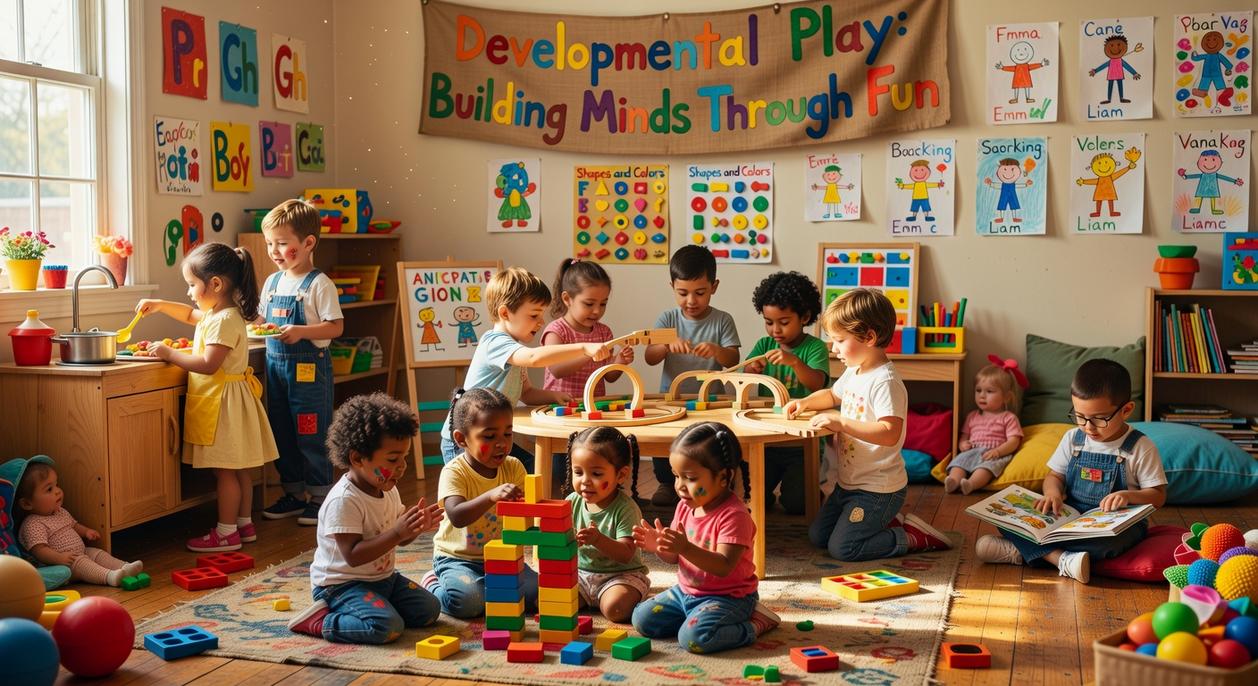
Play is a language lab in disguise. When children narrate their superhero missions or explain the “rules” of tag, they’re building vocabulary expansion—the natural process of learning new words through context. Research from the American Academy of Pediatrics shows that playful learning environments significantly boost language development, especially in early childhood. (Yes, even that stuffed animal tea party counts.)
Following game rules strengthens listening and narrative skills. To stay in the game, kids must practice active listening—fully concentrating and responding thoughtfully. Pretend play also sharpens storytelling abilities; studies published in Early Childhood Research Quarterly link imaginative play with stronger narrative structure and comprehension.
Don’t overlook non-verbal communication. Through facial expressions, gestures, and tone, children decode social cues—core to the role of play in child development. If you’ve ever seen a child pause after a friend frowns, you’ve witnessed real-time emotional literacy.
For deeper insights, explore social skills development what parents should know.
Physical Development: Growing Strong and Coordinated
Physical development refers to how children grow stronger, move better, and gain control over their bodies. It’s not just about getting taller—it’s about coordination, balance, and stamina.
Gross motor skills involve large muscle groups used for running, jumping, and climbing. Think playground races or climbing the jungle gym (yes, even that “one more time!”). These movements build strength, balance, and coordination while supporting the role of play in child development.
Fine motor skills focus on smaller muscles in the hands and fingers. Drawing, molding clay, or stacking tiny blocks strengthen hand-eye coordination—meaning the brain and hands work together smoothly. This is ESSENTIAL for writing and buttoning shirts independently.
Healthy habits start early. Active play supports heart health, maintains a healthy weight, and boosts overall endurance.
• CAPS
•
•
When we simplify it, movement is practice for life. The more children move, the more confident and capable they become.
How Parents Can Encourage Powerful Play
Powerful play doesn’t require fancy gadgets. It requires intention.
Create a “Yes” Space. Designate a safe, accessible area where kids can explore freely—low shelves, soft mats, washable bins, and art supplies within reach. When children don’t hear “no” every five minutes, confidence grows (and yes, a little mess is part of the magic). A prepared space reduces stress for you and boosts independence for them.
Prioritize Unstructured Time. Research shows the role of play in child development supports problem-solving, language growth, and emotional regulation (American Academy of Pediatrics, 2018). Protect daily free play instead of overscheduling activities.
Offer Open-Ended Toys.
- Blocks for engineering feats
- Dress-up clothes for storytelling
- Crayons and clay for creativity
These adapt as your child grows, stretching imagination rather than limiting it.
Join In—Don’t Take Over. Follow their lead. Ask, “What happens next?” instead of rewriting the plot. Pro tip: narrate what you see to build vocabulary naturally.
Play isn’t extra—it’s essential. The role of play in child development shapes cognitive, social, emotional, and physical growth. So what’s next? Start small. Set aside 20 minutes today for unstructured, child-led fun. No agenda, no corrections, no phone in hand. Follow their lead, even if that means becoming a dragon or building a pillow fort (yes, again). You might wonder, What if I don’t have time? Reframe routines—turn dinner prep into a counting game or bath time into a science lab. Over time, these moments compound. Pro tip: protect this time like an appointment. Consistency turns play into progress daily.
Helping Your Child Thrive Through Play
You came here wanting to better understand the role of play in child development and how it truly shapes your child’s growth. Now you can see that play isn’t “just fun” — it builds cognitive skills, strengthens emotional resilience, improves social confidence, and supports healthy physical development.
When children don’t get enough meaningful play, they can struggle with focus, creativity, and self-regulation. That worry you’ve felt — wondering if you’re doing enough to support your child’s growth — is valid. The good news is that simple, intentional play experiences at home can make a powerful difference.
Make play a daily priority. Create space for imagination. Join in when you can. Encourage unstructured exploration. Small, consistent efforts lead to big developmental wins.
If you want practical parenting tips, expert-backed child development insights, and simple activities that actually work, explore our trusted resources today. Thousands of families rely on our guidance to support their child’s growth with confidence. Start now and give your child the strong developmental foundation they deserve.
 Daniel Marshalliniar writes the kind of parenting tips and advice content that people actually send to each other. Not because it's flashy or controversial, but because it's the sort of thing where you read it and immediately think of three people who need to see it. Daniel has a talent for identifying the questions that a lot of people have but haven't quite figured out how to articulate yet — and then answering them properly.
They covers a lot of ground: Parenting Tips and Advice, Child Development Insights, Educational Resources for Kids, and plenty of adjacent territory that doesn't always get treated with the same seriousness. The consistency across all of it is a certain kind of respect for the reader. Daniel doesn't assume people are stupid, and they doesn't assume they know everything either. They writes for someone who is genuinely trying to figure something out — because that's usually who's actually reading. That assumption shapes everything from how they structures an explanation to how much background they includes before getting to the point.
Beyond the practical stuff, there's something in Daniel's writing that reflects a real investment in the subject — not performed enthusiasm, but the kind of sustained interest that produces insight over time. They has been paying attention to parenting tips and advice long enough that they notices things a more casual observer would miss. That depth shows up in the work in ways that are hard to fake.
Daniel Marshalliniar writes the kind of parenting tips and advice content that people actually send to each other. Not because it's flashy or controversial, but because it's the sort of thing where you read it and immediately think of three people who need to see it. Daniel has a talent for identifying the questions that a lot of people have but haven't quite figured out how to articulate yet — and then answering them properly.
They covers a lot of ground: Parenting Tips and Advice, Child Development Insights, Educational Resources for Kids, and plenty of adjacent territory that doesn't always get treated with the same seriousness. The consistency across all of it is a certain kind of respect for the reader. Daniel doesn't assume people are stupid, and they doesn't assume they know everything either. They writes for someone who is genuinely trying to figure something out — because that's usually who's actually reading. That assumption shapes everything from how they structures an explanation to how much background they includes before getting to the point.
Beyond the practical stuff, there's something in Daniel's writing that reflects a real investment in the subject — not performed enthusiasm, but the kind of sustained interest that produces insight over time. They has been paying attention to parenting tips and advice long enough that they notices things a more casual observer would miss. That depth shows up in the work in ways that are hard to fake.