
Why Cognitive Development Matters Early On
A child doesn’t just get smarter with age they think differently. In the early years, everything from learning to tie shoes to understanding cause and effect reflects deep, ongoing shifts in how the brain works. Kids move from reacting to the world around them to actively questioning it. That’s not just cute that’s cognitive development in action.
These early mental milestones set the foundation for how well a child will perform in school, handle emotions, and interact with others. Struggles with focus, memory, or problem solving in the early stages can ripple through adolescence and beyond. Noticing when a child masters (or misses) these stepping stones matters more than memorizing facts or hitting arbitrary academic goals.
Parents and educators aren’t bystanders in this process they’re builders. Every conversation, game, or challenge that invites curiosity or independent thinking helps shape the brain’s wiring. The more tuned in the adults are to what stage a child is in, the better they can offer the right kinds of support at the right time. It’s not about speeding things up it’s about growing right.
Piaget’s Four Key Stages of Cognitive Development
Jean Piaget’s theory of cognitive development breaks childhood thinking into four main stages. Each one marks a shift in how a child understands the world, solves problems, and relates to others.
Sensorimotor Stage (0 2 years)
In this first stage, babies learn by doing grabbing, tasting, moving around. Reality is whatever they can see and touch. Concepts like cause and effect start to form. Object permanence (knowing something exists even when it’s out of sight) kicks in toward the end of this stage.
Preoperational Stage (2 7 years)
This is the age of make believe. Kids at this stage thrive on pretend play but still struggle with logic and the idea that others may see things differently. You’ll notice a lot of “me first” thinking it’s not selfishness, it’s just where their brains are.
Concrete Operational Stage (7 11 years)
Now reasoning gets stronger. Kids start understanding things like quantity, time, and cause and effect in a more grounded way. They can take another person’s perspective and solve problems, as long as the problems aren’t too hypothetical.
Formal Operational Stage (12 and up)
This is where teenagers start thinking like adults in theory, anyway. Abstract thought kicks in. They can imagine complex scenarios, debate ideas, and think ahead. Not all teens hit this stage at the same time, and for some, it’s inconsistent.
Understanding these stages gives parents and educators a baseline. Each child moves at a different pace, but knowing what’s typical helps guide realistic support.
(For full breakdown, read: cognitive development stages)
Spotting Milestones and Delays

Understanding what typical development looks like and what to watch out for can help parents and educators provide timely, effective support.
What Healthy Development Looks Like
Each stage of cognitive development brings its own milestones. While every child progresses at their own pace, there are general skills and behaviors to expect:
Sensorimotor Stage (0 2 years):
Explores the world through senses and actions
Begins to understand cause and effect
Develops object permanence (knowing objects exist even when out of sight)
Preoperational Stage (2 7 years):
Engages in pretend play and displays strong imagination
Uses language more consistently
Struggles with seeing perspectives of others (egocentric thinking)
Concrete Operational Stage (7 11 years):
Understands logical principles tied to concrete situations
Grasps concepts like time, space, and quantity more accurately
Begins to classify and organize objects
Formal Operational Stage (12+ years):
Capable of abstract and hypothetical thinking
Can consider multiple perspectives and form moral reasoning
Thinks about future possibilities and problem solving strategies
Early Signs of Cognitive Delay
While variation is normal, some signs may suggest a need for further evaluation:
Delayed language development or limited vocabulary for age
Difficulty following simple directions or remembering sequences
Trouble with basic problem solving puzzles, sorting, or matching
Lack of interest in social interaction or play
Challenges with attention span or consistently responding to stimuli
If any of these behaviors persist beyond typical age ranges, it’s important to consult with a developmental specialist or pediatrician.
How Environments Influence Development
The setting in which a child grows can significantly impact cognitive growth for better or worse.
Supportive Environments May Include:
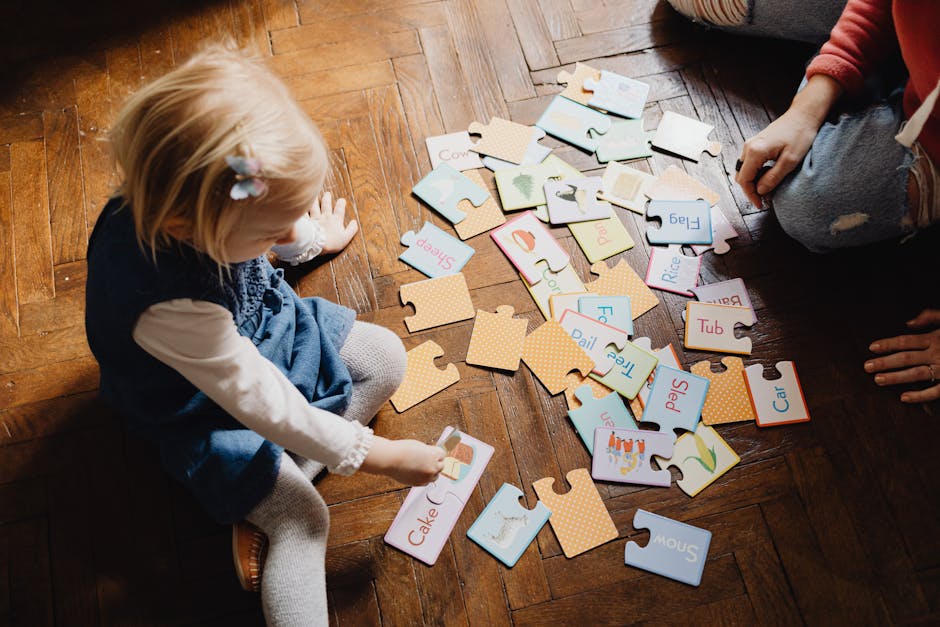
Access to books, puzzles, and open ended toys
Encouraging conversations and active listening from adults
Safe spaces to explore curiosity through play and hands on experiences
Unsupportive Environments Might Involve:
Overuse of screens and under stimulation
Lack of interaction or responsive communication
High stress or unpredictability in daily routines
Creating a consistent, enriching, and low stress environment fosters exploration and confidence, laying a strong foundation for future learning at every stage.
How Parents and Educators Can Support Each Stage
Supporting cognitive growth doesn’t require flashy toys or complex lesson plans. It starts with paying attention to where a child is right now and meeting them there. For a toddler in the sensorimotor stage, this could mean giving them everyday objects to explore or narrating actions out loud. With school age kids, it might look like talking through their reasoning or asking, “What do you think will happen next?” not giving them the answers.
Pushing too hard, too fast? That’s where things break down. Kids aren’t small adults. Asking a five year old to grasp abstract math or a ten year old to plan like a teenager usually leads to frustration for everyone. It’s not about simplifying the content, but about honoring the process. Cognitive leaps come when kids are challenged just enough to stretch, but not so much they shut down.
Some smart tools? Open ended questions. Books that spark imagination. Science kits without step by step instructions. And above all: silence. Let kids talk, think, and figure things out. Curiosity doesn’t need a script it needs space. If you’re not sure what’s age appropriate, check out this deeper dive into the cognitive development stages.
Final Takeaway: Growth Is Not a Race
Kids aren’t robots. They don’t learn on a schedule, and trying to speed things up usually backfires. One child might grasp abstract reasoning at 10; another might still be sorting it out at 13. That’s not a flaw it’s human variability. Cognitive development isn’t about being ahead of the curve; it’s about understanding where a child is now and meeting them there.
Knowing the stages from exploring the world through touch to wrestling with big abstract ideas isn’t a blueprint for perfection. It’s a guide for support. The point isn’t to pressure a child into the next stage. It’s to help them thrive where they are.
In the end, growth that’s nurtured not rushed tends to go deeper. So the goal isn’t to move faster. It’s to show up, stay curious, and help each child build their own solid ground one stage at a time.