
Finding safe, engaging, and truly educational online resources for your child can feel overwhelming. With so many options available, parents often struggle to separate high-quality learning platforms from distracting or low-value content. If you’re searching for free educational websites for kids that genuinely support your child’s academic growth and development, you’re in the right place.
This article is designed to help you quickly identify trusted, age-appropriate websites that make learning fun while reinforcing essential skills. We’ve carefully reviewed platforms based on educational value, ease of use, child safety standards, and alignment with modern learning goals. Drawing on child development principles and proven educational practices, we focus on resources that encourage curiosity, creativity, and critical thinking.
By the end, you’ll have a curated list of reliable online tools that support your child’s learning journey—without adding extra stress to your day.
Your Guide to the Best Digital Learning Tools for Children
The internet is packed with apps claiming to be educational, but quality and accessibility vary wildly. We’ve evaluated platforms that go beyond flashy animations and focus on measurable skill growth (because screen time should earn its keep).
- Adaptive reading programs with built-in dyslexia-friendly fonts and audio scaffolding.
- Math tools that show step-by-step reasoning instead of just right/wrong badges.
- Creative coding spaces that encourage experimentation over perfection.
Unlike generic roundups of free educational websites for kids, we highlight privacy standards, offline-friendly options, and progress-tracking parents can actually understand.
What Makes an Online Resource Truly “Accessible”?
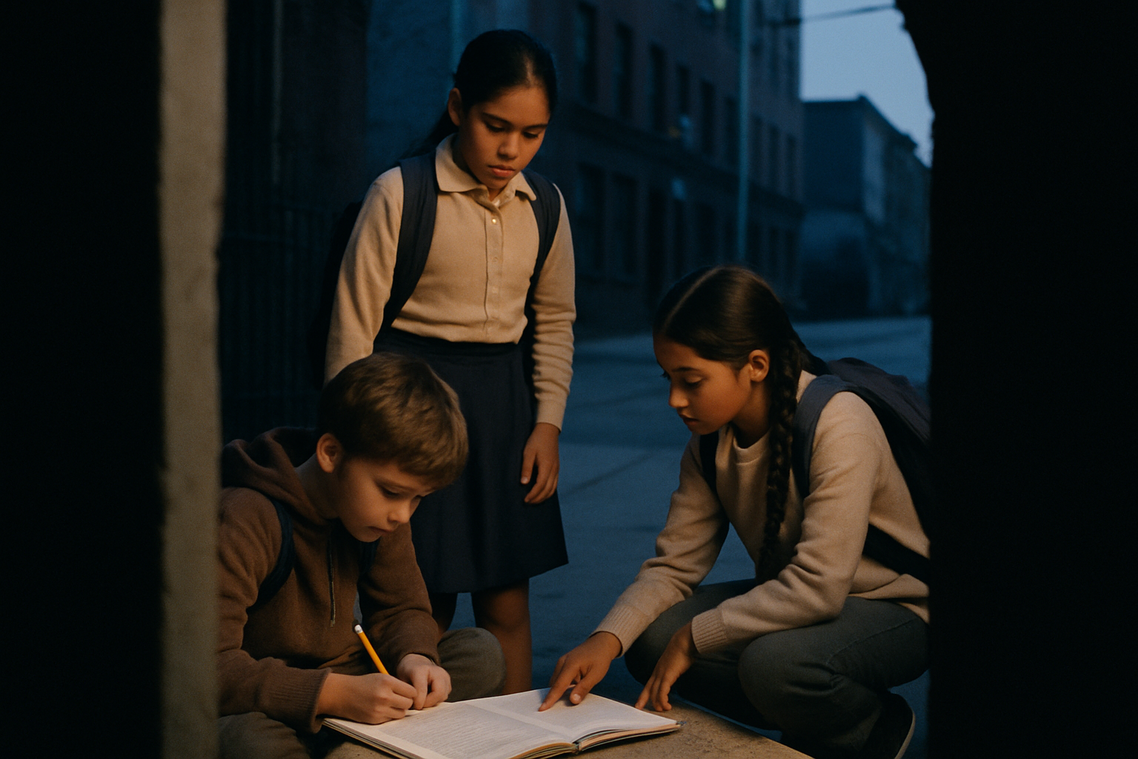
At first, I assumed “accessible” simply meant free. If families didn’t have to pay, I figured the job was done. However, I quickly learned that cost is only one piece of the puzzle. I once recommended a list of free educational websites for kids, only to hear parents say their children couldn’t navigate the cluttered layouts or constant ads. That was a wake-up call.
So what does true accessibility mean? First, ease of use. A simple, kid-friendly interface—with clear menus and minimal distractions—lets children explore independently (without clicking ten pop-ups first).
Equally important is inclusive design. Features like text-to-speech, closed captions, high-contrast color schemes, and screen reader compatibility support children with visual, auditory, or learning disabilities.
In the end, I learned this: when technology removes barriers instead of creating them, kids build confidence, stay curious, and focus on learning—not frustration.
Choosing among all-in-one learning platforms can feel like scrolling Netflix for preschoolers—too many options, not enough clarity.
For early learners (ages 2-8), Khan Academy Kids stands out. It’s a nonprofit, completely free app covering math, reading, and social-emotional skills. Its adaptive learning path—adjusting in real time to a child’s pace—means less frustration, more confidence. Think structured growth with gentle guidance.
Compare that with PBS Kids Games (ages 3-9), which leans heavily into play-based learning. Instead of linear lessons, kids explore STEM and literacy through familiar characters. It’s less about progression charts and more about discovery (Sesame Street meets science lab). Both are safe, ad-free, and among the best free educational websites for kids, but the experience differs: structured path vs. open-ended play.
For K-12 students, CK-12 Foundation is more like a digital textbook library. It offers customizable STEM lessons and interactive exercises—ideal for review or acceleration. If your goal is depth, CK-12 wins; if it’s engagement, PBS might.
Still unsure? Start by reading how to choose age appropriate learning apps for children to clarify your priorities. The right platform isn’t about more features—it’s about fit. Match the tool to your child’s temperament and learning goals. Consistency beats constant switching.
Sparking Curiosity: Best Resources by Subject
If the past few years have taught parents anything—especially since the 2020 shift toward at-home learning—it’s that high-quality digital tools can make a real difference. The good news? There are plenty of free educational websites for kids that genuinely spark curiosity rather than just fill screen time.
Science & Nature: National Geographic Kids
First, for budding biologists and future planet protectors, National Geographic Kids delivers stunning wildlife videos, quirky animal facts, and interactive games about ecosystems. Visual learners, in particular, thrive here because concepts like food chains (how energy moves from plants to predators) come alive through vivid imagery. Some argue videos are “passive” learning—but when kids excitedly explain what a mantis shrimp can do, you’ll see the retention is real.
Reading & Literacy: Storyline Online
Meanwhile, Storyline Online features actors reading children’s books aloud, modeling fluency (smooth, expressive reading) and improving comprehension. Back in 2019, educators increasingly emphasized read-aloud modeling as critical for literacy development, and research from the National Reading Panel supports guided oral reading as a way to build fluency. (Yes, even big kids secretly enjoy being read to.)
Coding & Logic: Code.org
Next, Code.org introduces computer science through block-based coding—drag-and-drop programming that teaches logic without overwhelming syntax. Their “Hour of Code,” launched in 2013, remains a global entry point. Critics sometimes worry coding is too technical for young children. However, learning sequencing and problem-solving early mirrors how kids naturally tackle puzzles.
Art & Creativity: Tate Kids
Finally, Tate Kids blends art history with games and creative challenges inspired by famous works. Creativity, after all, isn’t a luxury—it’s cognitive cross-training (and occasionally gloriously messy).
Finding the right tools for diverse learners is like building a ramp beside a staircase—both reach the same door, but one makes access possible for everyone. For beginning readers of all ages, Tar Heel Reader acts as a gentle on-ramp, offering simple books with speech support and switch access. It turns text into a friendly guide, almost like having a patient narrator whisper the story aloud. For students with visual impairments, platforms that work smoothly with built-in screen readers such as VoiceOver or TalkBack function like a flashlight in a dim room, illuminating clear layouts and uncluttered text. When exploring free educational websites for kids, look for that same clarity. A general tip: browser Reader View extensions sweep away ads and distractions, like clearing a messy desk before homework. Accessible design is not a luxury; it’s the bridge that helps every child cross into confident learning. Pro tip: pause.
Creating an Empowering Digital Learning Space at Home
The real challenge isn’t screen time. It’s choice overload. Thousands of apps promise genius-level growth (as if every eight-year-old needs a startup résumé). Parents freeze, worried they’ll pick wrong.
Here’s a contrarian take: more tools don’t mean better learning. In fact, too many platforms dilute focus and curiosity. Research from the OECD shows structured, purposeful tech use improves outcomes, while excessive or unfocused use does not (OECD, 2015).
Quality beats quantity every time.
Start Small, Stay Curious
Look for resources that are well-designed, curriculum-aligned, and accessible. Platforms like free educational websites for kids can support core skills without overwhelming your child.
This week, choose one resource and explore it together. Not to master it. To enjoy it.
Shared discovery builds confidence, strengthens bonds, and models lifelong learning (and yes, you might learn fractions again too).
Tools, used intentionally, spark curiosity and growth.
Help Your Child Learn, Grow, and Thrive Starting Today
You came here looking for meaningful ways to support your child’s learning without overwhelm, confusion, or endless searching. Now you have practical strategies, creative ideas, and access to free educational websites for kids that make learning both effective and fun.
Every parent worries about keeping their child engaged, confident, and academically on track. The good news? With the right tools and guidance, you can turn everyday moments into powerful learning opportunities.
Don’t let uncertainty or lack of time hold your child back. Start exploring the recommended resources, try one new activity this week, and make learning part of your daily routine. Thousands of families trust our expert-backed tips and curated resources to simplify parenting and boost their child’s development.
Take the next step now—bookmark this guide, explore the tools shared, and put one idea into action today. Small steps lead to big growth.
 There is a specific skill involved in explaining something clearly — one that is completely separate from actually knowing the subject. Zayric Xelthorne has both. They has spent years working with healthy parenting practices in a hands-on capacity, and an equal amount of time figuring out how to translate that experience into writing that people with different backgrounds can actually absorb and use.
Zayric tends to approach complex subjects — Healthy Parenting Practices, Parenting Tips and Advice, Child Development Insights being good examples — by starting with what the reader already knows, then building outward from there rather than dropping them in the deep end. It sounds like a small thing. In practice it makes a significant difference in whether someone finishes the article or abandons it halfway through. They is also good at knowing when to stop — a surprisingly underrated skill. Some writers bury useful information under so many caveats and qualifications that the point disappears. Zayric knows where the point is and gets there without too many detours.
The practical effect of all this is that people who read Zayric's work tend to come away actually capable of doing something with it. Not just vaguely informed — actually capable. For a writer working in healthy parenting practices, that is probably the best possible outcome, and it's the standard Zayric holds they's own work to.
There is a specific skill involved in explaining something clearly — one that is completely separate from actually knowing the subject. Zayric Xelthorne has both. They has spent years working with healthy parenting practices in a hands-on capacity, and an equal amount of time figuring out how to translate that experience into writing that people with different backgrounds can actually absorb and use.
Zayric tends to approach complex subjects — Healthy Parenting Practices, Parenting Tips and Advice, Child Development Insights being good examples — by starting with what the reader already knows, then building outward from there rather than dropping them in the deep end. It sounds like a small thing. In practice it makes a significant difference in whether someone finishes the article or abandons it halfway through. They is also good at knowing when to stop — a surprisingly underrated skill. Some writers bury useful information under so many caveats and qualifications that the point disappears. Zayric knows where the point is and gets there without too many detours.
The practical effect of all this is that people who read Zayric's work tend to come away actually capable of doing something with it. Not just vaguely informed — actually capable. For a writer working in healthy parenting practices, that is probably the best possible outcome, and it's the standard Zayric holds they's own work to.