If you’re searching for effective ways to help your child build strong reading foundations, you’re in the right place. Early literacy skills—like letter recognition, phonemic awareness, and basic comprehension—shape how confidently children learn to read and write in the years ahead. This article explores how early literacy worksheets can support those skills in fun, practical, and age-appropriate ways.
Parents and caregivers often wonder which activities truly make a difference and how to use them without overwhelming their child. Here, you’ll find guidance on choosing the right worksheets, using them alongside everyday learning moments, and turning simple exercises into meaningful progress.
Our recommendations are grounded in established child development research and widely accepted early education practices, drawing on insights from experienced educators and literacy specialists. By the end, you’ll understand not just what to use, but how to use early literacy worksheets effectively to nurture confident, curious young learners.
Unlocking Your Child’s Reading Potential: A Parent’s Guide
Every parent wants to raise a confident reader. Yet the marketplace feels like Netflix for literacy—endless options, unclear outcomes (and a lot of flashy distractions).
Here’s the real divide: Skill-Building vs. Entertainment.
- App A: Bright graphics, catchy songs, minimal phonics practice.
- Tool B: Simple books, phonics games, and early literacy worksheets focused on letter-sound mastery.
One entertains. The other builds decoding—the ability to connect letters to sounds, a core reading skill backed by the National Reading Panel (2000).
Foundational skills beat flashy features every time.
Choose tools that strengthen phonemic awareness and comprehension. That’s how lifelong readers are made.
The Five Pillars of Early Literacy: What Every Child Needs
The “Big Five” form the backbone of reading instruction, and in my view, they’re non‑negotiable.
- Phonemic Awareness is the ability to hear and manipulate individual sounds in spoken words, like breaking “cat” into c‑a‑t. Without this, reading feels like decoding a secret code with no key.
- Phonics connects letters to sounds. When kids grasp that b makes /b/, written language suddenly clicks.
- Vocabulary means knowing what words actually mean. A child can pronounce “enormous,” but without meaning, comprehension stalls.
- Fluency is reading with speed, accuracy, and expression (not like a monotone robot). It frees up brainpower.
- Comprehension is the ultimate goal: understanding and interpreting text.
Some argue kids will “just pick it up.” I disagree. Intentional practice, including early literacy worksheets, builds confident readers. Strong foundations now prevent frustration and academic gaps later on. That investment pays lifelong dividends ahead.
Hands-On Tools for Cracking the Letter-Sound Code
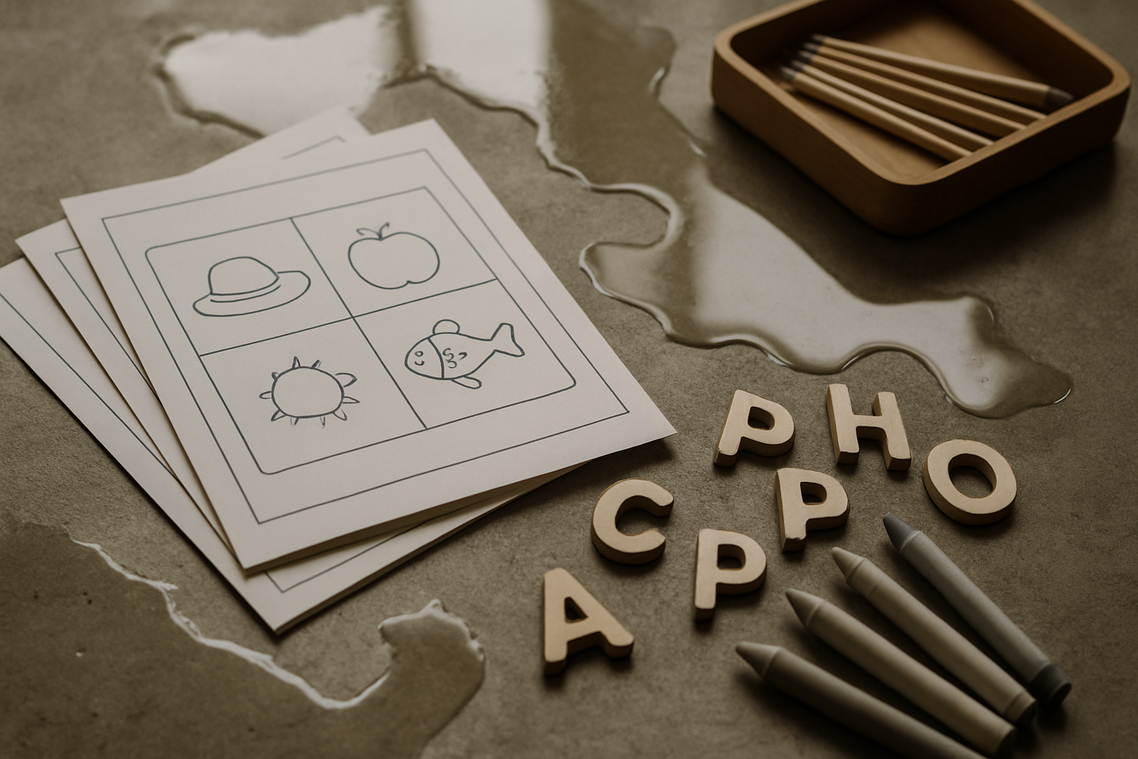
When kids are learning to read, they’re cracking what educators call the letter-sound code—the understanding that letters represent sounds. It’s not magic (though it can feel like it). It’s practice with the right tools.
Magnetic Letters & Cookie Sheet
A cookie sheet and a pile of magnetic letters can turn your kitchen into a word lab. Because the letters stick, children can build, swap, and rebuild words without worrying about messy handwriting.
“I made ‘cat’!” one child shouted. “What if we change the /c/ to /b/?” a parent asked. Click. bat. That simple sound swap builds phonemic awareness—the ability to hear and manipulate individual sounds in words (a critical predictor of reading success, according to the National Reading Panel).
Pro tip: Keep only the letters your child has learned in the pile to avoid overwhelm.
Sound Sorting Baskets
Grab small objects and label baskets by beginning sound. A “b” basket might hold a ball, button, and block. “Does ‘sun’ go in the ‘s’ basket?” you might ask. “Yes! /s/ like snake!” they reply. Sorting makes abstract sounds concrete.
Decodable Readers
Decodable readers are books made up of letter-sound patterns a child has already learned. Unlike predictable books (“I see the dog. I see the cat.”), decodables require actual decoding. Some argue predictable text builds confidence faster. But confidence built on guessing fades quickly. When a child says, “I read that all by myself,” and truly decoded every word—that’s lasting confidence.
Sand or Salt Tray
Tracing letters in sand links movement to sound. “This is ‘m,’ /mmm/,” a teacher might model. The tactile feedback strengthens memory (a technique supported by multisensory literacy research). Pair these tools with early literacy worksheets for reinforcement—not replacement.
From Words to Worlds: Materials that Build Meaning and Joy
Words are building blocks. Give children the right materials, and they’ll construct entire universes (move over, Marvel).
High-Quality Picture Books
Choose books with rich vocabulary and layered illustrations. By rich vocabulary, we mean precise, descriptive words that stretch understanding beyond “big” and “nice.” During dialogic reading—an interactive style where adults ask open-ended questions and invite predictions (Whitehurst et al., 1988)—pause to ask, “Why do you think she did that?” or “What might happen next?” Those questions turn story time into a conversation, not a monologue.
Story Sequencing Cards
Narrative structure—the organized way a story unfolds (beginning, middle, end)—can feel abstract. Sequencing cards make it visible. Children arrange scenes in order, strengthening comprehension and retelling skills. It’s basically storyboarding, Pixar-style.
DIY “Feeling” Puppets
Create simple stick puppets with varied expressions. Discuss character motivation (the reason behind actions). When a wolf looks sad instead of scary, the plot suddenly has layers (and maybe a redemption arc).
Personalized Vocabulary Jar
Write new words on slips of paper and review weekly. Repetition builds retention (Nation, 2001). Pair this with early literacy worksheets for reinforcement.
For structured skill-building, explore best online math resources for elementary students. Pro tip: revisit jar words in everyday conversation to cement mastery.
Weaving Literacy into the Fabric of Family Life
Literacy doesn’t start at a desk. In my opinion, it starts at the breakfast table, in the car, and during bedtime negotiations (yes, even the third glass of water counts).
The Power of Environmental Print
Street signs, cereal boxes, grocery lists—these are examples of environmental print, the everyday text children see around them. When you point to a stop sign and say, “That says stop,” you’re teaching that words carry meaning. Research shows that print awareness is a key early predictor of reading success (National Early Literacy Panel, 2008). I’d argue this matters more than drilling flashcards.
Creating a Cozy Reading Nook
A small, well-lit corner with a few front-facing books makes reading inviting. Not a library—just a soft chair and rotating titles. When books are accessible, kids choose them more often (Scholastic Kids & Family Reading Report, 2022). Keep early literacy worksheets nearby for variety—but don’t make them the star.
The Daily Read-Aloud Ritual
If you do one thing, do this. Read aloud daily. Even restless kids benefit; dialogic reading—asking questions and letting them predict—boosts vocabulary (Whitehurst et al., 1988).
Narrate Your Day
Saying, “I’m pouring the milk into the cup,” builds vocabulary and sentence structure. These oral language skills are the foundation of comprehension. It may feel silly. I think it’s powerful.
Building a strong reader isn’t about expensive software, but about consistent, joyful engagement with foundational skills. In other words, it’s connection over cost. Consider this comparison: flashy apps versus kitchen-table conversations. One may entertain; the other builds phonemic awareness (the ability to hear and play with sounds) and vocabulary.
Likewise, curated programs versus simple routines: five pillars practiced with read-alouds, letter tiles, and early literacy worksheets often outperform pricey subscriptions. Some argue tech saves time, yet research shows shared reading boosts comprehension and bonding (Harvard Center on the Developing Child).
So, choose one new activity this week and try it.
Build Strong Reading Foundations Starting Today
You came here looking for practical ways to support your child’s reading journey—and now you have a clear path forward. From phonemic awareness activities to engaging storytelling and consistent routines, you understand how small, daily efforts can build lasting literacy skills.
If your child is struggling with letter recognition, sounds, or early reading confidence, you’re not alone. Many parents worry they’re not doing enough or aren’t sure where to start. The good news? With the right tools and a simple plan, you can turn frustration into progress and make learning feel exciting again.
One of the most effective next steps is incorporating structured early literacy worksheets into your weekly routine. These targeted activities reinforce key skills, provide repetition where it matters most, and give your child the confidence boost they need to succeed.
Don’t wait for reading challenges to grow. Start using proven, parent-friendly resources designed to make learning simple and effective. Explore our top-rated literacy tools today and give your child the strong, confident start they deserve.
 There is a specific skill involved in explaining something clearly — one that is completely separate from actually knowing the subject. Zayric Xelthorne has both. They has spent years working with healthy parenting practices in a hands-on capacity, and an equal amount of time figuring out how to translate that experience into writing that people with different backgrounds can actually absorb and use.
Zayric tends to approach complex subjects — Healthy Parenting Practices, Parenting Tips and Advice, Child Development Insights being good examples — by starting with what the reader already knows, then building outward from there rather than dropping them in the deep end. It sounds like a small thing. In practice it makes a significant difference in whether someone finishes the article or abandons it halfway through. They is also good at knowing when to stop — a surprisingly underrated skill. Some writers bury useful information under so many caveats and qualifications that the point disappears. Zayric knows where the point is and gets there without too many detours.
The practical effect of all this is that people who read Zayric's work tend to come away actually capable of doing something with it. Not just vaguely informed — actually capable. For a writer working in healthy parenting practices, that is probably the best possible outcome, and it's the standard Zayric holds they's own work to.
There is a specific skill involved in explaining something clearly — one that is completely separate from actually knowing the subject. Zayric Xelthorne has both. They has spent years working with healthy parenting practices in a hands-on capacity, and an equal amount of time figuring out how to translate that experience into writing that people with different backgrounds can actually absorb and use.
Zayric tends to approach complex subjects — Healthy Parenting Practices, Parenting Tips and Advice, Child Development Insights being good examples — by starting with what the reader already knows, then building outward from there rather than dropping them in the deep end. It sounds like a small thing. In practice it makes a significant difference in whether someone finishes the article or abandons it halfway through. They is also good at knowing when to stop — a surprisingly underrated skill. Some writers bury useful information under so many caveats and qualifications that the point disappears. Zayric knows where the point is and gets there without too many detours.
The practical effect of all this is that people who read Zayric's work tend to come away actually capable of doing something with it. Not just vaguely informed — actually capable. For a writer working in healthy parenting practices, that is probably the best possible outcome, and it's the standard Zayric holds they's own work to.